


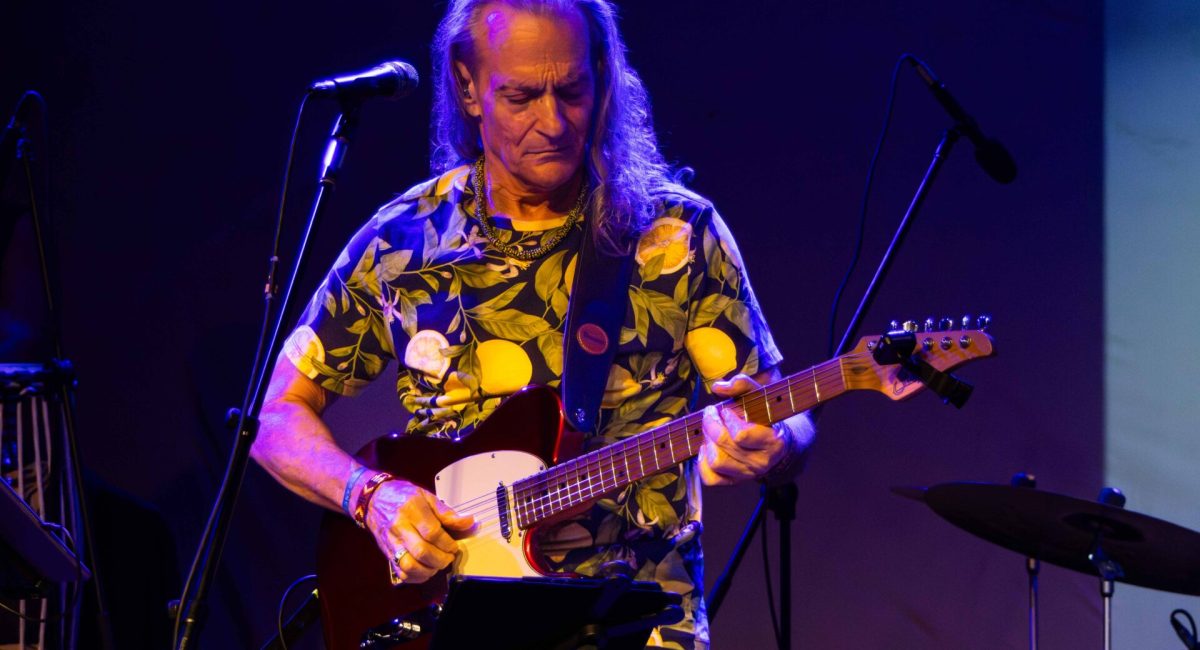
Lon Bové
Lon Bové is an American musician, vocalist, guitarist, songwriter, and educator born in Cincinnati, Ohio, who has been based for decades in Salvador, Bahia, Brazil. His artistic journey is defined by a singular approach: rather than merely transporting North American blues traditions to Brazil, Bové has drawn from his deep immersion in Bahia to craft a unique musical language built upon the convergence of Black American music and Afro-Brazilian roots.
Bové holds a Master’s degree in Education from the University of Alabama. Musically, his foundation is rooted in the blues, yet his artistic vocabulary fluidly incorporates soul, rock, Rhythm & Blues, New Orleans traditions—including the iconic Second Lines—and elements of surf music. In Salvador, this rich background unlocked a direct dialogue with samba, ijexá, and other Afro-Brazilian musical expressions. The result is a signature sound that bridges two of the most important Black musical traditions across the Atlantic.
The M.O.T.H. Album and Nine Grammy Nominations
One of the ultimate milestones in Lon Bové’s career is his original album, M.O.T.H., a masterwork that earned him nine Grammy nominations. Among the tracks is “My Angel,” recorded alongside the legendary American singer-songwriter Michael McDonald. The album’s acclaimed repertoire also includes “Believe Me,” “Bernadine,” “Real Bad Habit,” “The Moth,” “Eye to Eye,” “Arenal,” and “It’s Too Late.”
Michael McDonald’s featured performance on “My Angel” represents a pivotal connection between Bové’s international artistic footprint and his original discography.
Choosing Bahia
Bové’s relationship with Bahia went far beyond a temporary stay or a passing artistic experiment. Settling permanently in Salvador, he dedicated himself to researching the state’s diverse rhythms and cultural expressions, integrating them directly into his work. This immersive experience became the core of his artistic mission: to establish a profound dialogue between North American blues and R&B and Brazilian musicality, particularly the traditions rooted in Afro-Bahian heritage.
This perspective seamlessly drives the multicultural nature of his music. Bové does not perform simply as an American musician playing the blues in Brazil. Instead, his body of work seeks to understand the historical and musical threads connecting different expressions of the African Diaspora, translating them into a contemporary global language.
Banda Terráquea
In 2013, Bové founded Banda Terráquea in Salvador, a project that became the primary vehicle for his ongoing musical exploration. The band masterfully fuses Rhythm & Blues with Afro-Brazilian foundational grooves, bringing together prominent musicians from the Bahian music scene under Bové’s leadership as frontman, lead vocalist, and guitarist.
Terráquea also embodies a worldview that has guided Bové’s entire career: music as a powerful tool to connect people and cultures, and as an instrument to inspire environmental action. The band’s very concept links artistic production with cultural, educational, and socio-environmental initiatives.
Over the years, the ensemble has performed across festivals, cultural events, and concerts throughout Salvador and the state of Bahia. Their lineup has consistently featured elite musicians from various segments of Brazilian music, including seasoned professionals who have backed major national headliners.
Toque Bahia and Social Impact
Music education remains a core pillar of Bové’s social impact initiatives. Among them is Toque Bahia, a community project that brought music classes to children in Salvador’s Alagados neighborhood. The initiative was part of Bové’s broader vision of music as an essential tool for inclusion, personal development, and social transformation.
Another major front was Atitude Planeta Verde (Green Planet Action), a project developed by Banda Terráquea to merge music, education, and environmental consciousness. In 2018, an edition of the project at the Teatro da Cidade in Salvador brought together live musical acts and a youth choir composed of students and members of the cultural group Bagunçaço, focusing on water preservation and ecological awareness.
The following year, the initiative continued with the concert series “Água Vida Pura Vida” (Water Life Pure Life), which featured special guest performances by Saulo Fernandes, Olodum Juvenil, and local students. The project combined live music with interactive educational workshops tackling plastic pollution and the conservation of natural resources.
The Radio Terra Project
This lifetime bond between music and education achieved a new scale with The Radio Terra Project, a non-profit organization founded and presided over by Lon Bové.
The organization’s core mission is to democratize access to music education by providing free online classes. The comprehensive curriculum covers instruments such as acoustic guitar, electric guitar, percussion, drums, keyboard, saxophone, trumpet, trombone, and harmonica, alongside vocal coaching. Bové participates directly as an instructor, utilizing classic blues and popular music repertoires to teach instrumental techniques.
Radio Terra’s approach stems from a simple yet ambitious idea: leveraging technology to shatter the financial and geographical barriers that so often block access to music education. The project directly connects musical practice with the development of discipline, creativity, focus, and vital life skills.
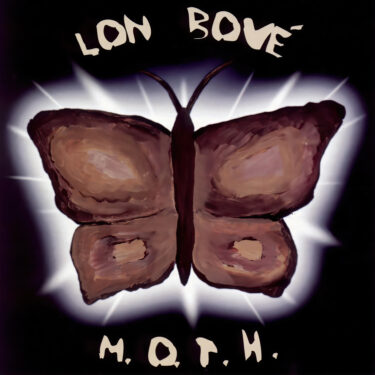
LON BOVÉ - M.O.T.H.
M.O.T.H. is Lon Bové’s original album, capturing the unique convergence of North American blues, soul, and R&B with his deep musical journey in Bahia.
With nine Grammy nominations, the record brings together compositions that reveal Bové’s singular identity as a guitarist, vocalist, and songwriter, featuring ‘My Angel’—a special collaboration with Michael McDonald.
A body of work that beautifully connects diverse cultures and traditions of Black music through a contemporary and distinct signature sound.
More than a mere fusion of genres, Lon Bové’s body of work can be understood as deep artistic research into convergences: between the United States and Brazil, tradition and contemporary creation, music and education, and artistry and social responsibility.
His guitar styling stems from the vocabulary of the blues, yet discovers entirely new rhythmic and cultural horizons within samba, ijexá, and other Afro-Bahian musical expressions. In the same vein, his background as an educator directly shapes the way he envisions his artistic endeavors—viewing the stage, the classroom, and the community simply as different platforms for the exact same mission.